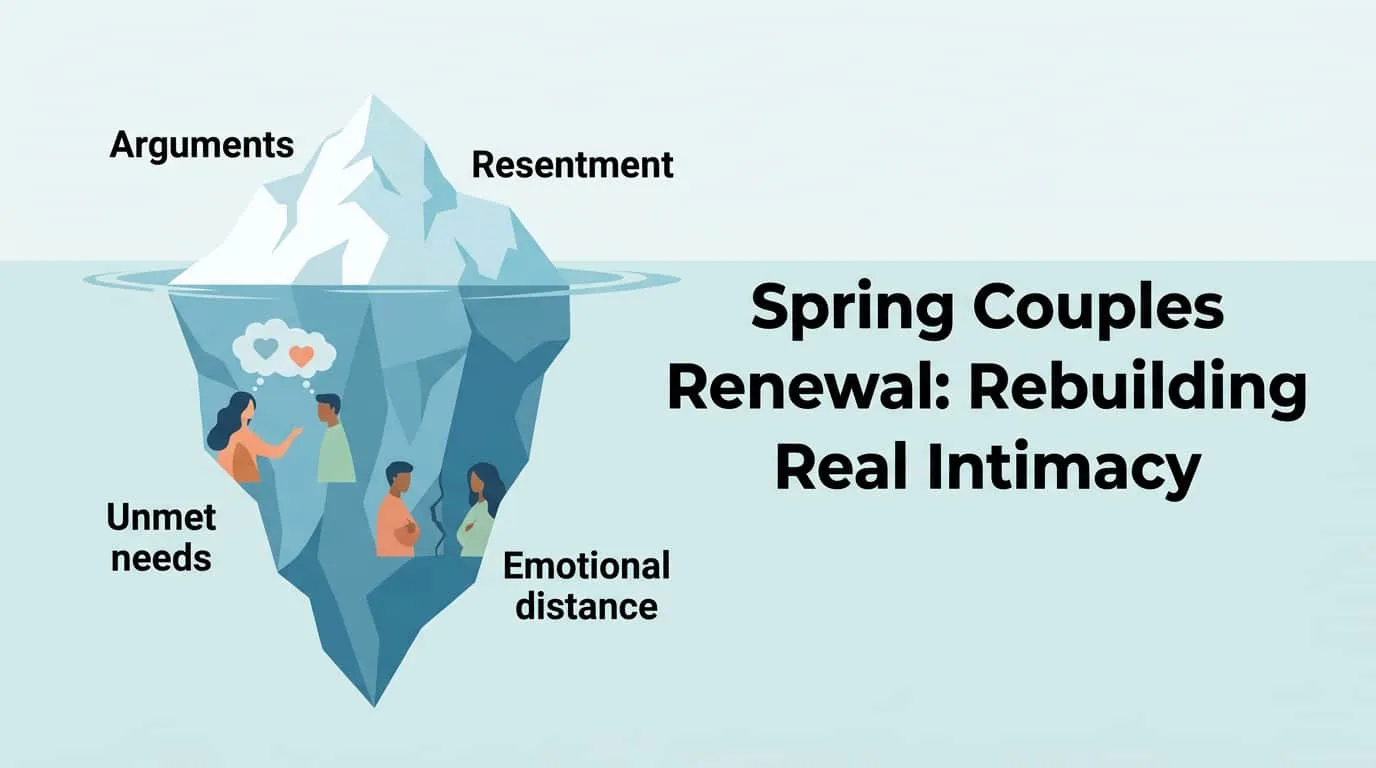
Spring in Orlando is short, sweet, and easy to miss. Before the summer heat locks everyone indoors and the humidity climbs past 80%, there's a narrow window, roughly March through May, when the city feels alive in a way that's genuinely good for relationships. Cooler mornings, blooming gardens, and longer evenings create natural conditions for couples to reconnect. If your relationship has felt stuck lately, this season is worth using intentionally.
Ready to take the first step? Contact Orlando Thrive Therapy at (407) 592-8997 and speak with a specialist today.
Why Does Florida's Spring Season Matter for Couples?
Florida's spring matters for couples because it's the only comfortable window before six months of summer heat makes outdoor connection much harder. From late February through May, Orlando temperatures sit in the mid-70s, and the afternoon thunderstorm season hasn't started yet. Gulf Coast beaches are accessible in under two hours. The Mead Botanical Garden in Winter Park is in full bloom. The Everglades offer guided tours that feel nothing like everyday life. These experiences create what researchers call "novelty exposure," and novelty is one of the most reliable ways to re-activate closeness in long-term relationships.
Couples who use this season intentionally, rather than letting it pass, tend to arrive at summer with a stronger foundation. The steps below are practical, specific, and designed for real Orlando residents with real schedules.
Step 1: What Does a Digital Detox Actually Look Like for Couples?
A digital detox for couples means setting specific, agreed-upon boundaries around phone use during shared time, not a vague commitment to "be more present." Start with a single two-hour window, two or three times per week, where both phones go in a drawer.
Use that time somewhere that makes disconnecting easier. A sunset walk along the Clermont waterfront, a quiet hour at Lake Eola Park, or an evening drive to watch the sky change over the Everglades puts physical distance between you and the notifications. Most couples report that the first 20 minutes feel uncomfortable. After that, conversation tends to open up naturally.
Research from the American Psychological Association found that couples who regularly engage in device-free time together report 37% higher relationship satisfaction scores than those who don't. The science is straightforward: undivided attention is the foundation of feeling valued, and feeling valued is the foundation of intimacy.
Step 2: How Do Shared New Experiences Build Intimacy?
Shared new experiences build intimacy by triggering the same neurological response as early-stage attraction. When both partners face something unfamiliar together, the brain associates that mild excitement with the person beside them.
This spring, think about what you haven't done together. Kayaking through Wekiwa Springs State Park costs around $30-$45 per person for a two-hour rental and puts you in an environment that's genuinely different from daily life. The Harry P. Leu Gardens in Orlando offers 50 acres of seasonal blooms that make for a slow, conversation-friendly afternoon. If you want something with more structure, beginner cooking classes through local studios typically run $65-$90 per couple and give you a shared project to laugh over.
The point isn't the activity itself. New experiences require communication, a bit of vulnerability, and cooperation. Those three things directly mirror what healthy relationships need every day.
Step 3: How Can Couples Have More Vulnerable Conversations?
Vulnerable conversations happen when both partners feel genuinely safe, not just told they should open up. Creating that safety takes structure. Without it, conversations about relationship needs tend to either stay surface-level or escalate quickly.
One method used in EMDR therapy and Emotionally Focused Therapy (EFT) involves each partner answering the same question before any discussion begins. Try these as a starting point:
- "What's one thing I've been wanting more of in our relationship this year?"
- "What's something you've been carrying that you haven't told me?"
- "What would make you feel more connected to me this season?"
Give each person five uninterrupted minutes. No fixing, no defending, no problem-solving during that window. Couples who practice this format for as little as 15 minutes per week report measurable improvement in emotional closeness within 6 to 8 weeks.
A therapist in Orlando, Florida can guide you through more structured versions of these conversations if the self-directed approach feels too charged. This is especially true for couples dealing with unresolved resentment, past hurt, or communication patterns that keep repeating.
Step 4: How Do Shared Seasonal Goals Strengthen a Relationship?
Shared seasonal goals strengthen a relationship by shifting your identity as a couple from two individuals managing life to a team actively building something together. That shift in framing changes how you show up for each other.
Before April ends, sit down together and write out three to five goals for the next six months. Keep them specific and time-bound:
- Financial: Save $500 per month toward a trip by November.
- Health: Walk or bike together three mornings per week through the summer.
- Social: Host one dinner at home each month to stay connected to friends.
- Relationship: Schedule one overnight trip before the year ends.
Review the list together in 30 days. Not to audit each other, but to check in. Goals that are written down and revisited regularly are 42% more likely to be achieved than those discussed once and forgotten. More than the goals themselves, the habit of planning together is what builds long-term partnership.
Step 5: What Role Does Professional Support Play in Couples Renewal?
Professional support gives couples a structured, neutral space to work through the patterns that self-directed renewal can't always reach. Spring is genuinely one of the best times to start, because couples tend to feel more motivated and less defensive when life outside the therapy room feels lighter.
At Orlando Thrive Therapy, Gottman Method and EFT-trained therapists work specifically with couples who want to move past resentment and build something more resilient. Our marriage counseling approach in Winter Park highlights these evidence-based methods because they address not just communication style, but the emotional patterns underneath it. For couples who can't always make it to an in-person session, Teletherapy Services and EMDR therapy are available for Florida and New York residents.
A standard couples session with a therapist in Orlando, Florida runs approximately $150-$200 per session at private-pay practices. Most couples working on specific goals see meaningful progress within 8 to 12 sessions.
Ready to Make This Spring Count?
Real intimacy doesn't rebuild itself. It takes two people choosing, repeatedly, to prioritize each other over everything competing for their attention. The steps above work. But sometimes a couple needs a guide to get through the harder conversations, the ones that keep stalling out at home.
Orlando Thrive Therapy works with couples across the Orlando area, from our Winter Park office to Dr. Phillips, with teletherapy available statewide. Call us at (407) 592-8997 to schedule a consultation and take the first step toward real, lasting connection this spring.