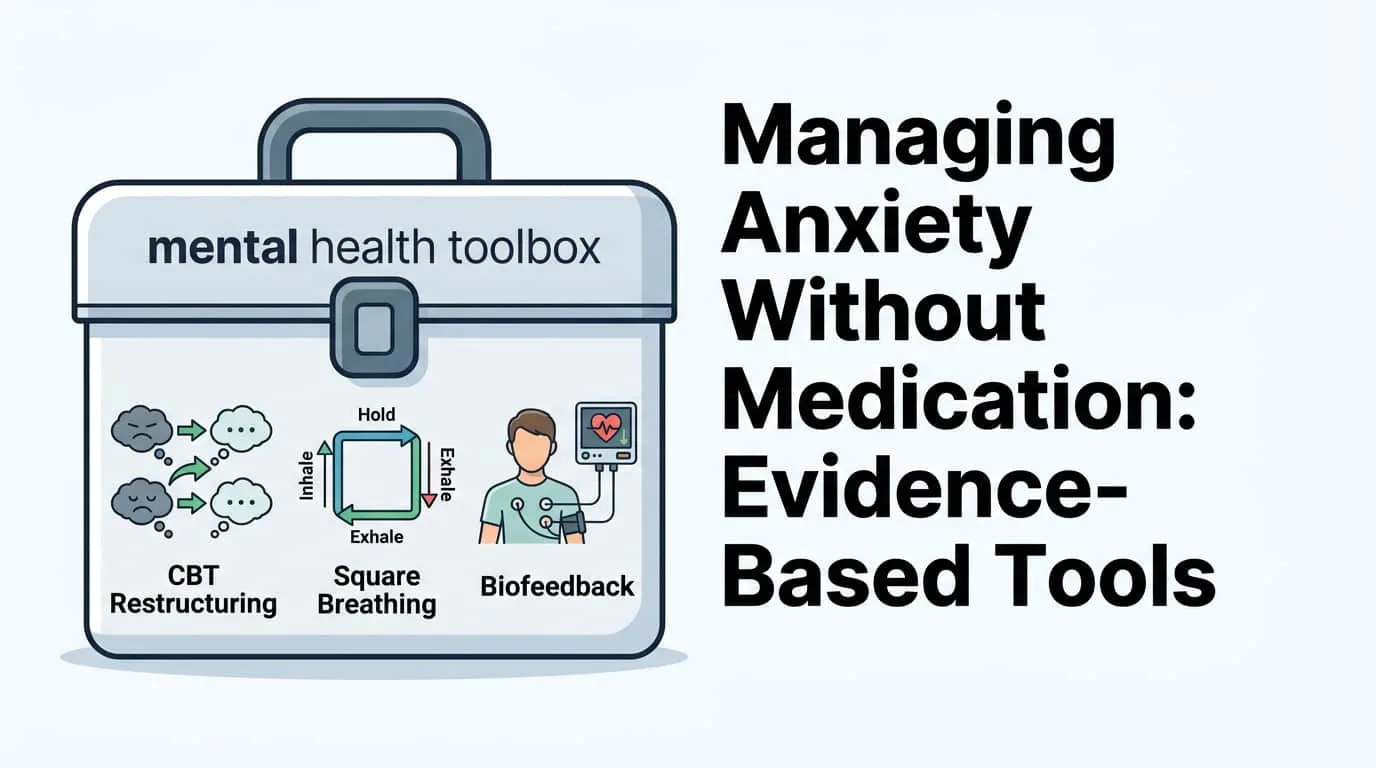
Anxiety doesn't have to control your life. There are proven, non-medication strategies that can significantly reduce symptoms, and many Orlando residents are already using them to feel better within 4 to 8 weeks. If you want practical tools that actually work, Orlando Thrive Therapy is here to help. Call us at (407) 592-8997 to start a conversation today.
Living in Central Florida has its perks. Warm weather, beautiful parks, and a vibrant community. But the pace of life here can also pile on pressure. Between long commutes on I-4, demanding work schedules, and the constant hum of a growing city, anxiety has become something many couples and families quietly carry every day. The good news? You don't need a prescription to start feeling better.
Science-backed strategies, from specific therapy techniques to changes in your daily routine, can make a real difference. Here's what actually works.
Why Does Anxiety Feel So Physical?
Anxiety isn't just in your head. When your nervous system senses a threat, real or perceived, it activates your sympathetic "fight or flight" response. Cortisol and adrenaline flood your system. Your heart rate climbs. Muscles tighten. Breathing becomes shallow.
The problem is that this response, designed to protect you from real danger, often gets triggered by everyday stress, like a difficult conversation with your partner or a tight work deadline. Over time, chronic activation of this system wears your body down and keeps your mind in a near-constant state of alert.
This is why non-medication interventions work so well. They don't just address the thoughts. They target the nervous system itself, helping your body physically shift out of threat mode.
What Are DBT TIPP Skills and How Do They Help?
DBT TIPP skills are a set of fast-acting distress tolerance techniques that work by directly changing your body's chemistry. TIPP stands for Temperature, Intense exercise, Paced breathing, and Progressive muscle relaxation. Research shows they can reduce emotional distress by up to 50% within minutes.
Temperature is one of the fastest tools. Submerging your face in a bowl of cold water for 30 seconds activates the mammalian dive response, which slows your heart rate almost immediately. It sounds strange. It works remarkably well.
Intense exercise, even a 10-minute brisk walk around Lake Eola, burns off the stress hormones your body has already released. This is why physical movement consistently ranks among the most effective anxiety interventions, not just as prevention, but as in-the-moment relief.
Paced breathing, specifically a 4-count inhale and 6-count exhale, activates your parasympathetic nervous system. This tells your body that the threat has passed and it's safe to calm down.
Progressive muscle relaxation involves deliberately tensing and releasing muscle groups from your feet upward. This reduces overall muscle tension and signals the brain to lower its threat response.
These techniques are especially useful for couples, because anxiety in one partner often triggers heightened stress in the other. Having a shared toolkit helps both people de-escalate together.
Can Changing Your Thoughts Actually Reduce Anxiety?
Yes. Cognitive Behavioral Therapy, commonly called CBT, is one of the most well-researched anxiety treatments available. Multiple clinical studies show that CBT produces meaningful symptom reduction in 12 to 20 sessions for most people. Our anxiety counseling at Orlando Thrive Therapy integrates CBT alongside guided meditation and biofeedback to treat anxiety at both the mental and physiological level.
CBT works by helping you identify cognitive distortions, habitual thought patterns that aren't accurate but feel true. Common ones include:
- Catastrophizing: Assuming the worst possible outcome will happen
- Mind reading: Believing you know what others are thinking (and that it's negative)
- All-or-nothing thinking: Seeing situations as either perfect or a total failure
Once you can spot these patterns, you can interrupt them. One practical technique is scheduled "worry time." Pick a 15-minute window each day, say 5:00 to 5:15 PM, and give yourself permission to worry only during that window. When anxious thoughts arise outside that time, you acknowledge them and defer. Most people find that by 5:00 PM, many concerns feel less urgent. This creates real, measurable mental distance from runaway thinking.
How Do Your Lifestyle Choices Affect Anxiety Levels?
Quite significantly. Your daily habits either feed your nervous system or drain it, and the effect is more direct than most people realize.
Nutrition matters more than it's given credit for. Diets high in processed sugar cause blood glucose swings that amplify anxiety. Magnesium deficiency, common in adults who eat few leafy greens, is directly linked to increased cortisol production. Prioritizing whole foods, cutting back on caffeine after noon, and staying well-hydrated can noticeably reduce baseline anxiety within 2 to 3 weeks.
Vitamin D is particularly relevant here in Florida. Despite living in one of the sunniest states in the country, many Central Florida residents are deficient because they spend most of their time indoors or wear high-SPF sunscreen outdoors. Studies link low Vitamin D levels to increased rates of anxiety and depression. Spending 20 to 30 minutes outdoors daily, whether walking near Winter Park's Rollins College campus or along the trails at Wekiwa Springs State Park, offers both sunlight exposure and the calming effect of being in nature.
Sleep hygiene is another critical variable. Anxiety disrupts sleep, and poor sleep makes anxiety worse. It's a cycle that many couples in marriage counseling Florida therapists see regularly. Setting a consistent sleep and wake time, eliminating screens 60 minutes before bed, and keeping your bedroom cool (between 65 and 68 degrees Fahrenheit) are all evidence-backed sleep improvements.
What Are Grounding and Breathwork Techniques?
Grounding exercises anchor your attention to the present moment by engaging your senses directly. The 5-4-3-2-1 technique is one of the most widely used: identify 5 things you can see, 4 you can touch, 3 you can hear, 2 you can smell, and 1 you can taste. This interrupts anxious spiraling by redirecting your brain's attention from future-focused worry to present-moment reality.
Somatic experiencing takes this a step further. Rather than talking about anxiety, somatic methods ask you to notice where you physically feel it in your body. A tightness in the chest. A knot in the stomach. By staying with these sensations without judgment, your nervous system learns to process stored stress rather than suppress it. This approach is particularly effective for couples navigating anxiety that shows up in the relationship, since many of those physical responses are triggered interpersonally.
Breathwork techniques like box breathing (4 counts in, 4 hold, 4 out, 4 hold) or coherent breathing at 5 to 6 breaths per minute have been shown in multiple studies to measurably reduce heart rate variability in as little as 10 minutes of daily practice.
When Should You Consider Professional Support?
Self-guided techniques are genuinely powerful. But some anxiety is layered, rooted in past trauma, relationship dynamics, or biological factors that benefit from professional guidance.
If anxiety is affecting your relationship, your sleep more than 3 nights per week, or your ability to function at work, that's a signal to reach out. Couples dealing with anxiety together often find that working with a therapist, whether through marriage counseling Florida residents can access locally or via Teletherapy Services for those who prefer virtual sessions, accelerates progress significantly.
EMDR therapy is also worth knowing about. Eye Movement Desensitization and Reprocessing is an evidence-based treatment that helps reprocess traumatic memories contributing to anxiety. Research shows it can produce significant symptom reduction in fewer sessions than traditional talk therapy alone. For anxiety rooted in past experiences, it can be profoundly effective.
Build Your Own Toolkit and Take the Next Step
Managing anxiety without medication is entirely possible. The strategies here, DBT TIPP skills, CBT thought work, lifestyle optimization, breathwork, and grounding techniques, each address a different part of the anxiety cycle. Used together, they can create lasting change.
Start small. Pick one technique from each category and practice it consistently for two weeks. Track how you feel before and after. What works for one person doesn't always work for another, so treat this as personal research.
If you're ready to build a plan with expert support behind you, Orlando Thrive Therapy is here. Our team serves couples and individuals across the Orlando area with offices in Winter Park, Dr. Phillips, and Downtown Orlando. We also offer marriage counseling Florida couples can access in person or virtually. Call us at (407) 592-8997 to schedule your first session.